BRICKS
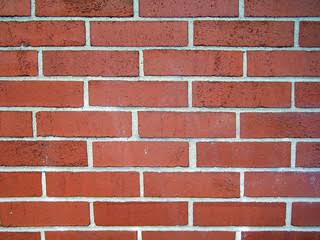
Bricks are blocks of
tampered clay molded to suitable shapes and sizes while it is still in plastic
condition, dried in the sun and burnt. Classification Bricks are broadly
classified Into Two
Categories

1) Sun Dried Bricks Or Kacha
bricks
2) Burnt bricks or Pucca bricks
1) Sun dried bricks
These bricks after
moulding have been dried in the sun and are used in the construction of
temporary and cheap structures.
These types of bricks should not be used at places of heavy
rains.
2) Burnt bricks or Pucca
These are of the following four types
a) First class bricks
These are well burned
bricks of uniform color.
These are free from
cracks.
Scratch with finger nails leaves no mark
These do not absorb
more than 15% of their weight of water
When struck with each other give a sharp metallic ringing
sound
These are free from nodules of free lime Uses: used in face
work of structures not to be plastered Used in flooring and reinforced
brickwork.
b) Second Class
Brickwork
These are as hard and well burnt bricks as the first class
but may be somewhat irregular in shape or size and may have slight rough
surface.
Uses:
used in unimportant situations or in places where the
masonry is to be plastered.
Used as brick ballast in RCC work and in lime concrete.
c) Third Class Bricks:
These are under burnt
bricks,
These are soft These have lighter color These emit a dull
sound when struck against each other Uses:
these are used in
temporary constructions not subjected to heavy loads or too heavy rains
d) Over Burnt Bricks:
These are over burnt bricks that are being near the fire in
the kiln get fused and lose their shap
Uses:
Used in the foundations of structures Used as aggregate for
concrete Used as road metal
Classification of bricks based on compressive strength
Bricks shall be classified based on their compressive
strength as given in table below:
CLASS
DESIGNATION
|
AVG.
COMPRESSIVE STRENGTH NOT LESS THAN (Kg/cm2)
|
350
|
350
|
300
|
300
|
250
|
250
|
200
|
200
|
175
|
175
|
150
|
150
|
125
|
125
|
100
|
100
|
75
|
75
|
50
|
50
|
35
|
35
|
Standard Tests of Bricks
Burnt clay bricks are subjected to the following tests
a) Test for
compressive strength (crushing strength)
b) Test for water absorption
c) Test for
efflorescence
a) Test for compressive
strength (crushing strength)
The brick specimen is immersed in water for 24 hours. The
frog of the brick is filled flush with 1:3 cement mortars and the specimen is
stored in damp jute bag for 24 hours and then immersed in clean water for 24
hours. The specimen is placed in compression testing machine with 6 mm plywood
on top and bottom of it to get uniform load on the specimen. Then load is
applied axially at a uniform rate of 14 N/mm2. The crushing load is noted. Then
the crushing strength is the ratio of crushing load to the area of brick
loaded. Average of five specimens is taken as the crushing strength
b) Test for water absorption
Brick specimen is weighed dry. Then they are immersed in
water for a period of 24 hours. The specimen are taken out and wiped with
cloth. The weight of each specimen in wet condition is determined. The
difference in weight indicates the water absorbed. Then the percentage
absorption is the ratio of water absorbed to dry weight multiplied by 100. The
average of five specimens is taken.
Water absorption=w2-w1/w1 *100
Where
w1=weight of dry brick
W2=weight
of wet brick after 24 hours immersion in water
c) Test for efflorescence
Place the brick specimen in a glass dish containing water to
a depth of 25 mm in a well-ventilated room. After all the water is absorbed or
evaporated again add water for a depth of 25 mm. After second evaporation
observe the bricks for white/grey patches.
The observation is
reported as ‘nil’, ‘slight’, ‘moderate’, ‘heavy’ or serious to mean
(a)
Nil: No patches
(b) Slight: 10% of area covered with deposits
(c)
Moderate: 10 to 50% area covered with deposit but unaccompanied by flaking of
the surface.
(d)
Heavy: More than 50 per cent area covered with deposits but unaccompanied by
flaking of the surface.
(e) Serious: Heavy deposits of salt
accompanied by flaking of the surface


